- hisolar@cnhisolar.com
- +86-13905874507
The Power Inverter for Home Solar System is a key component that converts direct current (DC) to alternating current (AC). Here is a brief description of how it works:
Power Inverter for Home Solar System is not just a simple conversion device, it also has a variety of intelligent functions such as monitoring, fault diagnosis and remote control, which provides convenience and protection for users.
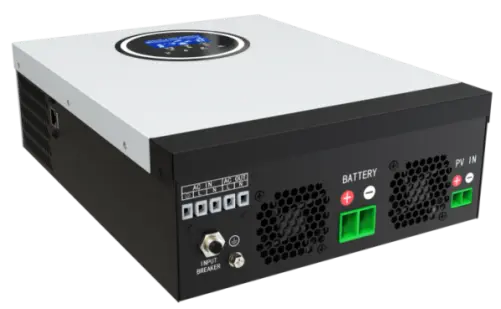
Power Inverter for Home Solar System can be divided into the following types according to its function and application scenario:
Pure sine wave inverter:
Modified sine wave inverter:
Square wave inverter:
Grid-connected inverter:
Off-grid inverter:
Hybrid inverter:
Advantages
Disadvantages
In summary, Power Inverter for Home Solar System has many advantages, such as efficient energy conversion, electricity cost saving, environmental protection and energy saving, but it also has some disadvantages, such as high initial investment and high maintenance requirements. Users should consider these factors comprehensively when selecting and using it to ensure efficient and stable operation of the system.
Power Inverter for Home Solar System can play an important role in various scenarios. Here are some typical applicable scenarios:
Home power system:
Power supply in remote areas:
Emergency backup power supply:
Mobile RV and camping:
Small shops and family farms:
Grid independent power system:
Grid-connected power generation system:
Smart home and energy management system:
Power Inverter for Home Solar System has shown great flexibility and practicality in these scenarios. It can not only provide a reliable power supply for the family, but also play an important role in energy conservation, environmental protection, cost reduction and quality of life. Users can choose the most suitable application scenario and inverter type according to their needs to make full use of solar energy resources.
When purchasing a Power Inverter for Home Solar System, users need to consider a variety of factors to ensure that the selected product can meet their needs and achieve efficient and stable operation. The following is a guide to purchasing an inverter:
Determine the needs and purpose:
Choose the inverter type:
Inverter efficiency:
Compatibility and scalability:
Protection function:
Brand and after-sales service:
Cost and budget:
User evaluation and word of mouth:
Installation Guide
Choose an installation location:
Installation preparation:
Installation steps:
Startup and testing:
Maintenance guide
Regular inspection:
Cleaning and maintenance:
Monitoring and Recording:
Software Update:
Professional Maintenance:
We will respond to your inquiry within 24 hours
We value your privacy
We use cookies to improve your browsing experience, deliver personalized content, and analyze our traffic.